CHI 2016: Global, Diverse, Good

What can a 1000 scientists achieve when they invest one hour doing voluntary work?

At the heart of Silicon Valley, the CHI 2016 conference broke through new ceilings. CHI (pronounced kai) is the most prestigious international conference in the field of human-computer interaction (HCI). It attracts researchers, designers, engineers, and artists who want to (re)shape technology and media to enhance people’s quality of life. This year, the conference took place in San Jose, USA. Over 3,800 participants from 52 countries presented their work in various media formats, including keynote presentations, media installations, interactive demos, and posters.

In the opening keynote, Dayo Olopade, a Nigerian-American journalist and author, portrayed the challenges she faced moving from the USA to Nairobi, and how the demographics and culture of different countries are unique and should be taken into account in the design of new digital tools. Dayo took the audience on a voyage to Africa where she slowly dissolved the western lense allowing them to see the chaotic, desperate Africa reveal its unconventional systems as an efficient act of “kanju”, a term which refers to the creativity that comes out of African difficulties. Continue reading
A Brief Survey on Software Recommendation Tools

Software engineering recommendation systems assist developers so that they can almost automatically find: 1) code snippets that match their programs, 2) appropriate APIs and libraries, 3) bug fixes, and 4) code changes. These systems are particularly important because they can help developers to handle large amounts of information and write stable programs. In this post, we briefly categorize existing recommendation approaches and tools.

Continue reading

An Introduction to Gamification in Human-Computer Interaction

User experience (UX) is a field within Human-Computer Interaction (HCI) that studies the whole experience of a user with a product, system, or service. UX focuses on  issues such as usability, ergonomics, cognitive load, and affective experiences. However, in the last years, there is a particular growing interest in understanding users’ motivation to use a product, system, or service. This interest is spawned by observable low engagement rates: it is not enough to have a useful system, one needs to also motivate and engage users in it. One possible solution to this comes from a field of study is called gamification or gameful design1, because its main inspiration comes from understanding the factors that make games fun and motivate people to play them voluntarily with so much engagement. Continue reading

Rise of the Chatbots

Almost two decades ago I saw in the arcades the futuristic fighting game “Rise of the Robots”. As a youngster I was imagining what the future of computing and robotics could be. The game ended up not being that great, regardless of that it wasn’t visually very realistic, but instead, it relied on the gameplay and partly on the player’s imagination for the immersion. Hence, around this time, I was dreaming of tablets (from Star Trek) and completely autonomous robots that would help us with everyday tasks (like terminators, without the killing part of course and maybe the Jetson’s robots?).

Yet the future was not exactly what I was expecting. After all this experimentation and technological progress, it seems that people hyped with Chatbots (or chatterbots) instead! Continue reading

Khandu Cards: Design for Kids… and grown-ups!

I recently received a set of Khandu cards after backing a Kickstarter. These cards are designed by a company called Seven Thinkers, their aim is to get kids thinking like designers early in life. I was interested immediately on reading about them, since part of my research focus is on the idea of design decks. I’ll have a paper published at CHI ’16 on the topic, and I’m working on another paper that will hopefully be accepted soon.

z08

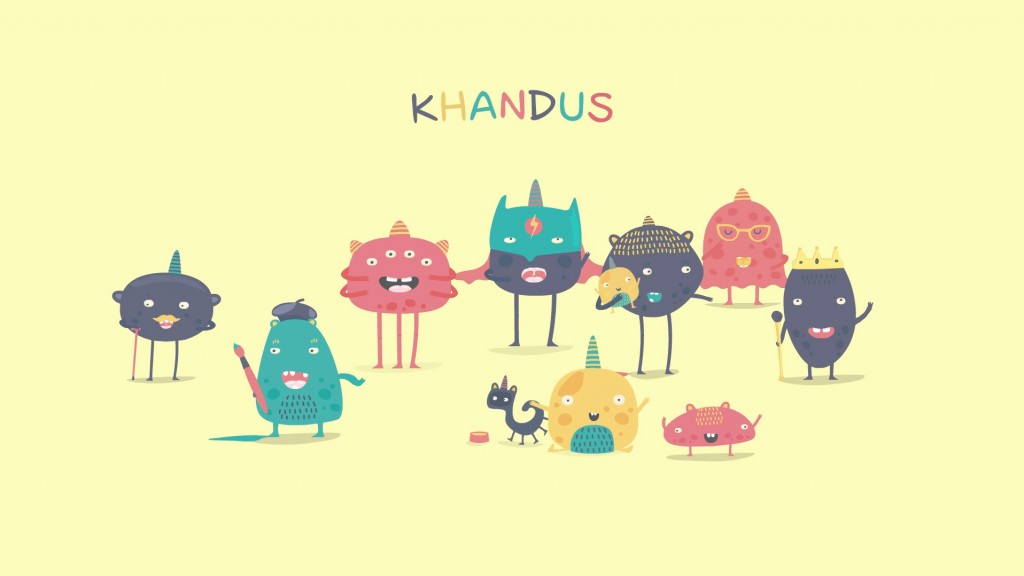
The fictional characters of Khandu

Design decks are decks of cards that help us work through a design process. These cards work well, because they mix up the lessons that a novice designer needs to learn in order to be a successful designer. In this post, I’ll discuss the format of the Khandu cards, and what I see as the value for novice designers.

The Khandu cards are based on a fictional world where the Khandus live. The Khandus are visible on cards, and some of their problems are described in the challenges. The cards are broken up into several decks. Each comes in a bag with names printed on them for storage. The decks are themed: challenges, people, tools, and actions. The Tool cards are further subdivided into 4 decks: prototyping – materials, prototyping, ideation, and inspiration.

Continue reading